The number of avalanches in the Alps is decreasing by 5% per decade
November 19, 2026
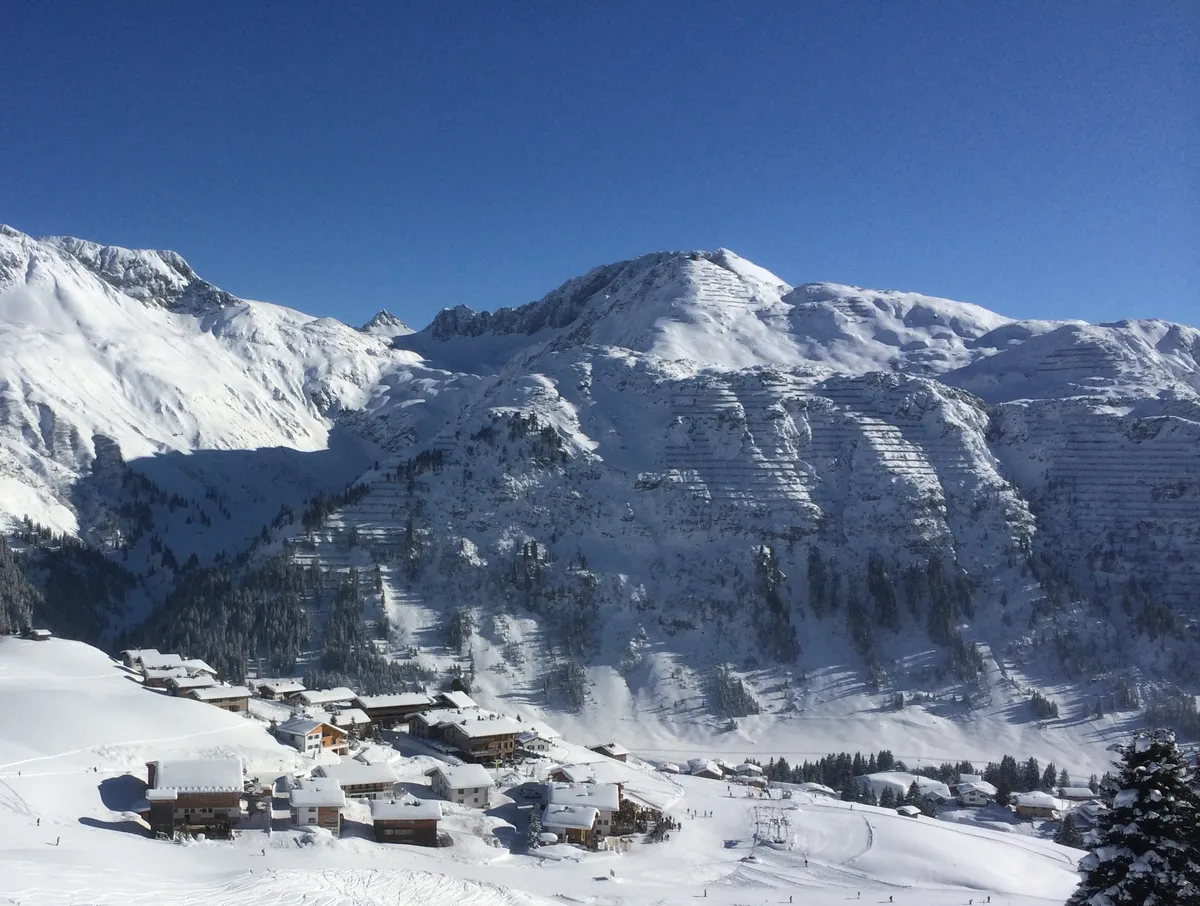
Changes in snowpack and the earlier snow melt in spring have reduced the number of avalanches by 5% every decade since 1950, and this decline will likely continue towards 2100, a recent study shows.
Less snow
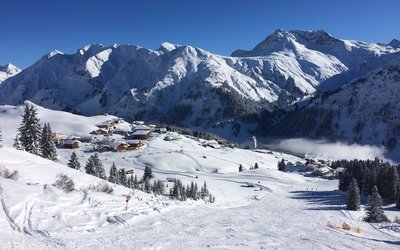
The amount of snow in the mountains of Europe is declining, and so is the length of the winter season. Little change is projected for the highest slopes, above 2000 metres, but at lower altitudes the effects will be great. As the snowpack – the quantity and quality of the snow on the ground – changes, so does snow avalanche activity.
Misleading observations
Long-term changes in avalanche activity cannot be quantified from observations because the reporting of avalanches has not been consistent over time. A recent study of avalanche activity in the French Alps throughout the 1958–2023 period shows that the observed number of avalanches in this period has increased. Based on this, one might be inclined to conclude that avalanche activity has increased, but that is not the case. On the contrary. Climate and snowpack model simulations point at a decrease of avalanche activity since 1958, the same study shows.
Projections 1950 - 2100
This new study focused on a relatively high elevation site in the French Alps and quantified changes in avalanche activity between 1950 and 2100. In this study, the researchers combined observations of almost 3000 avalanches, recorded between 2006 and 2023, and model simulations of snowpack conditions, based on climate model simulations. In a machine learning model, these observations and model simulations were linked. This way, the number of avalanches per day could be predicted from the simulated weather and snowpack conditions.
From these relationships between climate conditions, snowpack conditions and avalanches, avalanche activity was calculated over the period 1950-2100. The projection towards 2100 was based on a moderate and high-end scenario of climate change.
Less avalanches since 1958
The results of this study show a clear long-term decline in avalanche activity linked to climate warming. Since 1958, relative to the 1975–2005 baseline, the annual number of avalanches has declined by 4.8 % per decade. The decline is mainly driven by a sharp reduction in spring avalanches, while winter activity remains relatively stable.
The number of extreme avalanche events has also declined, although less pronounced than the decline in the total number of avalanches.
Decline continues toward 2100
This century, the annual number of avalanches is expected to decrease by 4.6% and 8.8% per decade under the moderate and high-end scenario of climate change, respectively. This corresponds to a 37% (65%) reduction under the moderate (high-end) scenario of climate change between now and 2100.
These results agree with those of previous studies and the general conclusion that the annual number of avalanches is decreasing largely due to the shortening of the avalanche season. Likely, changes will be small for the winter whereas spring avalanches will almost completely disappear.
The number of extreme events will probably also decline, albeit less pronounced. Avalanche risk remains in high alpine environments, even under ongoing climate change.
Source: Doussot et al., 2026. Natural Hazards and Earth System Sciences 26: 4383–4406.