Global water trends are a cause for serious concern, WMO warns in recent report
September 18, 2026
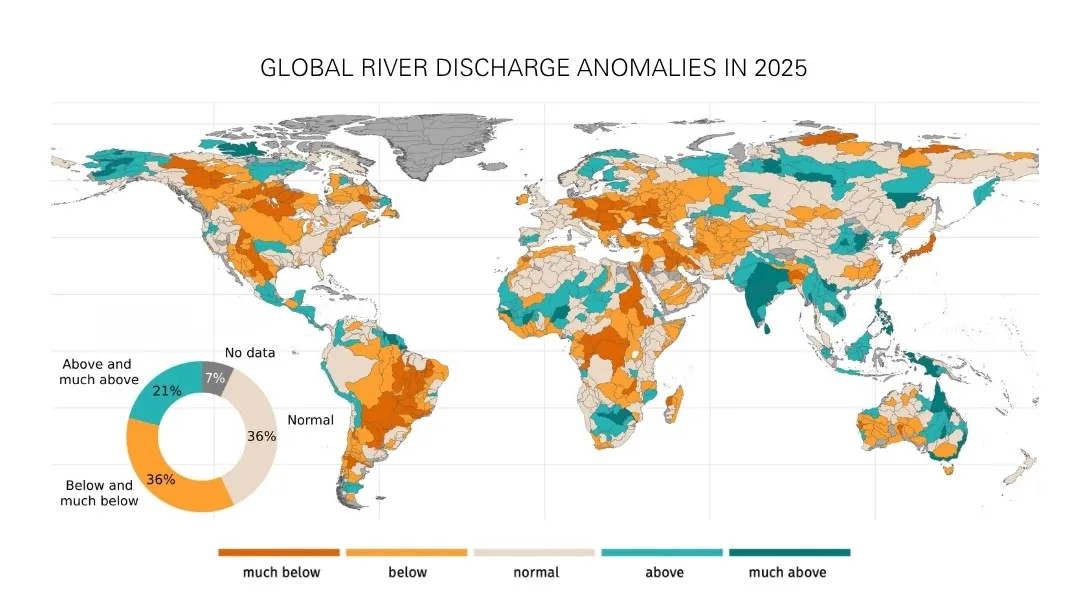
Map: Global river discharge anomalies in 2025 (Source: WMO, 2026)
Last year, rivers across the globe had one of the driest years in more than three decades. This week, the World Meteorological Organization (WMO) presented its latest report on the State of Global Water Resources. The organization is seriously worried about the current trend in global freshwater resources. The storage of freshwater on land shows a long-term decline, and so do glaciers. The experts warn for serious implications for people and economies in the future.
Key messages
In their key messages, they conclude that 2025 was one of driest years in 35 years in terms of river discharge, while the past 7 years have seen abnormal river flows. What’s more, the storage of freshwater on land has decreased globally in the past 10 years. Asia and Africa are the regions most affected by water-related disasters.
One of the worrying developments is that the variability in river discharge is increasing. Both situations with too little and too much water occur more often. Normal, predictable river flows occur less often now than three decades ago.
The situation is most critical in Asia and Africa. These continents ‘together accounted for at least half of all recorded water-related extreme events and more than 80% of reported associated deaths over the past five years’, the report states.
We are depleting our savings account
Now that periods of drought and extremely low river discharge are occurring increasingly often, groundwater reserves, glaciers and seasonal snowpack are of particular importance. The WMO calls them ‘The planet's savings account’. These reserves are a buffer in times of drought, but we are depleting them. For 10 years, global terrestrial freshwater storage has shown a declining trend. Every major glaciated region on Earth is losing ice mass, and groundwater reserves worldwide are gradually shifting towards a deficit. At the same time, the risk of flooding is increasing.
The changes in one place can have major consequences far away. The retreat of a glacier affects the freshwater availability for populations hundreds of kilometres downstream.
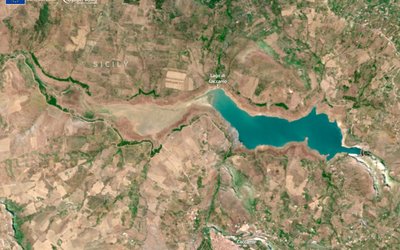
Europe
In 2025, river discharge was below normal in most of Eastern Europe. Freshwater storage in 2025 was below normal across Eastern, Southeastern and Northern Europa. The retreat of glaciers in Central Europe has progressed to such an extent that these glaciers have reached their maximum meltwater discharge. Eastern Europe and the Mediterranean were among the world regions experiencing severe droughts.