Fire management can reduce the risk of future wildfires, except for the largest ones
September 14, 2026
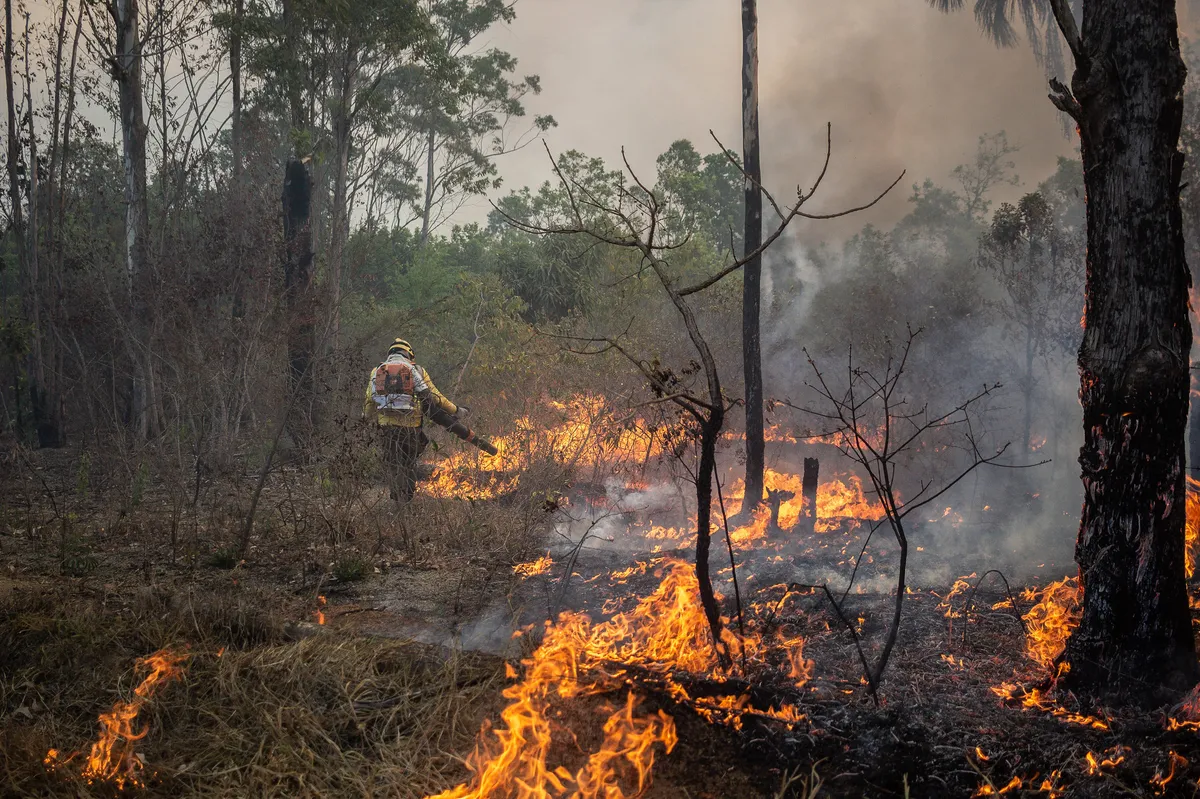
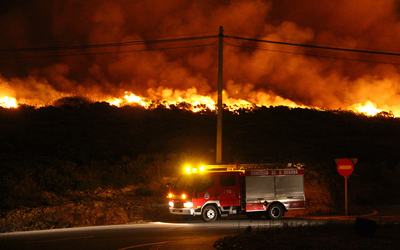
Photo: Fighting a wildfire in Portugal (www.flick.com)
There is a lot of debate whether we are experiencing more wildfires in recent years compared to the past. Some stress that climate change is already intensifying fire-prone weather across Europe. Others point at the effectiveness of expenditures in wildfire suppression.
No grip on large fires
All the evidence presented by scientists so far suggest that while human interventions – such as enhanced fire prevention, suppression, land cover change and evolving land management – have reduced the number of fires, they couldn’t get a grip on the large ones. In fact, firefighting can increase the risk of more severe and uncontrollable fires because successfully extinguishing small fires leads to an accumulation of fuel that feeds the largest fires.
Climate change vs human action
In a recent study, scientists focused on this combined effect of climate change and human action on future wildfire risk. Climate change will likely increase wildfire risk. To what extent will human action, including land use change and wildfire suppression, be able to counter these rising risks?
These scientists made projections of future fire regimes across Europe, driven by climate change and human action. They looked at changes between the current situation of 2000 - 2030 and the late-century future of 2070 - 2100.
They simulated future burned area for two contrasting scenarios of climate change and socio-economic developments, including changes in population density and land use. One of these scenarios is a low-end scenario of climate change in which greenhouse gas emissions are reduced substantially thanks to renewable energy technologies and effective policies on sustainable development. The other scenario is a high-end scenario with contrasting human action and policies.
The results show that both climate change and wildfire fighting capabilities determine the future of Europe’s wildfires. Other socio-economic factors, including changes in population density, land use and vegetation, are not dominant drivers at the continental scale but do influence wildfire risk at regional scales.
Climate change not fully offset
Climate change will intensify the weather conditions that lead to large wildfires. By the end of the century, this could increase annual burned area by 39% to 192% under the low-end and high-end scenario, respectively.
These numbers will likely be lower because of investments in fire management capacities. Burned area will still increase because of climate change, but this increase will be about 80% lower compared to scenarios without these investments.
Still, despite the continued investments in fire management capacities, strong climate change is projected to increase wildfire risk in about 55% of Europe's fire prone regions. On the one hand, improved wildfire management capacities can greatly limit the consequences of worsening fire weather. On the other hand, these investments may not fully offset the impacts of climate change.
Climate warming will continue to exacerbate fire risk, not only throughout the Mediterranean basin and across much of France, the Pyrenees, and the western Alps, but even in regions with historically low fire activity. Fire activity will probably remain minimal in Scandinavia due to the very low frequency of ignitions and relatively mild fire weather Conditions.
A common signal
The results of this study conform the results of previous studies on Europe’s future wildfire risk. Climate change will continue to be the dominant driver of increasing wildfire risk across Europe this century. A common signal emerges: climate change fosters weather conditions that increase the risk of wildfires, while human actions can limit the extent of this increase.
The authors conclude that ‘future wildfire regimes in Europe depend on the interaction between climate change and societal adaptation’. With limited climate change, part of the climate-driven increase in burned area may be offset by investments in fire management. However, with stronger warming, these investments may not provide an adequate response to the increasingly severe fire weather.
Source: Billing, M. et al., 2026. Global Change Biology 32: e71043.