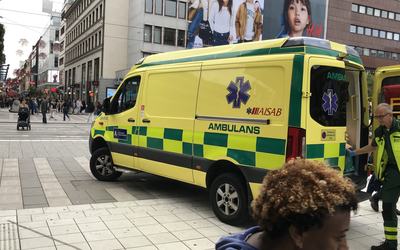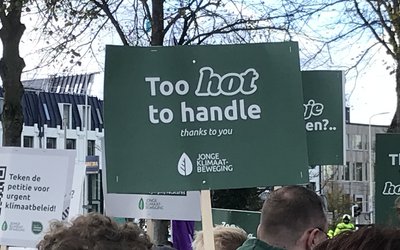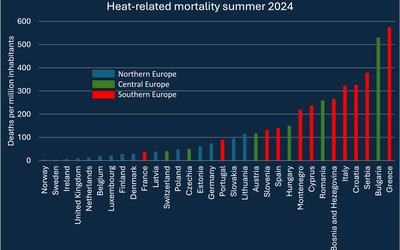
Both climate change and the urban heat island effect intensify heat stress in cities. Over the past few summers, tens of thousands of people have died in European cities due to heat stress, each year. The percentage of the population, in Europe and globally, living in cities is increasing. At the same time, the population is getting older and, therefore, more vulnerable to heat stress. Global warming continues and the growth of cities is increasing the urban heat island effect.
Clearly, adaptation is needed. What measures are most effective depends on the climate zone in which a city is located. A review of 64 scientific studies was carried out to evaluate the effectiveness of urban heat adaptation strategies across different climate zones. These were all, in turn, review studies themselves.
The review focused on air temperature at 1.5–2 metres above street level, where most pedestrians experience the heat.
Green, blue and grey
There are three types of measures: green, blue and grey. Green adaptation measures are about increasing the role of vegetation. This can be done, for instance, by building or expanding parks, planting more trees in the streets, and constructing green roofs and walls. Green walls are both green facades with vegetation rooted on the ground and living walls with vegetation rooted in substrate vertically attached to the building. Blue measures refer to the cooling effect of water, especially through evaporation, by constructing or increasing the size of lakes, ponds, and fountains, and by releasing water droplets into the air (misting). Grey measures are changes in urban design and in building characteristics that increase ventilation in the streets and solar reflection by buildings, and specific measures such as porous pavements that allow water to infiltrate and subsequently evaporate to cool the streets.
The general picture
The results show that an urban design with narrow streets has the highest cooling potential: 4.2 °C. Many other solutions are very effective as well. In terms of decreasing effectiveness, good results are reported for green walls (3 °C cooling potential), permeable pavements (2.9 °C), cool building envelopes (2.5 °C), water bodies and urban forests (both 2.1 °C), cool pavements, green areas, and shading devices (all 2 °C), street trees (1.5 °C), parks (1.3 °C), green roofs (1.1 °C), pavement watering (1 °C), cool roofs (0.5 °C) and water misting (0.3 °C). These are median values for all available studies. Variability is large, however, and the effectiveness according to individual studies can differ by a few degrees.
Climate zones
The study distinguished between four climate zones: tropical, arid, temperate and cold. In all climates, the presence of sufficiently large water bodies and parks are effective measures to cool the city. Water bodies can lower temperatures in the city by 2 °C to 2.5 °C. For parks the cooling effect can be 2.5 °C to 3 °C. For other effective measures, the cooling effect varies across climate zones.
Green walls perform better in arid climates – potentially lowering temperatures by 4 ± 1.4 °C – than in temperate climates, where the cooling effect is 2.4 ± 0.8 °C. Narrow streets are most effective in tropical and temperate climate zones, with cooling effects of 5.6 ± 1.8 °C and 4.7 ± 0.9 °C, respectively. In arid climates, narrow streets cool the cities by 2.6 ± 1.6 °C only.
Green solutions with a cooling effect based on evapotranspiration, such as parks and green walls, are less effective in tropical climates because of the high-humidity conditions that make evapotranspiration less efficient. The latter are very effective in arid climates where green walls may cool the surroundings by 4 ± 1.4 °C. However, these strategies may be hard to realise in arid climates when water availability is under stress.
In temperate climates, all solutions are more-or-less equally effective, with a potential cooling effect of at least 2 °C. Green areas perform best in temperate climates with a cooling effect of 4.4 ± 0.8 °C. Green areas include shrubs and hedges, medium-sized plants along roadways, and lawns. In continental climates no single specific solution stands out, although the amount of available data is relatively limited.
Night and day
These potential cooling effects refer to daytime conditions. In general, these solutions are also effective during the night, but the cooling effect is less. An exception is a city design with narrow streets. This is an effective solution to mitigate daytime heat, but during the night these high-density neighbourhoods are the hottest. Also, water bodies may slightly increase air temperatures during the night. This calls for assessing the potential trade-offs between daytime and nighttime effects of heat adaptation strategies.
More knowledge needed
Despite of all the studies on heat adaptation in cities, the available data on the effectiveness of many solutions is still rather poor. We know a lot about the cooling potential of water bodies, street trees, green walls, and parks. We know much less about the potential of solutions such as permeable pavements, urban forests, shading devices, water misting, pavement watering, and cool and green roofs. Also, the cooling potential for nighttime cooling remains relatively untapped.
Greater knowledge regarding the cooling capacity of various green, blue, and grey solutions—both during the day and night—will help us prepare our cities for the warmer future that lies ahead.
Source: Keravec-Balbot et al., 2026. Environmental Research Letters 21: 143003.