Famous Dutch ‘Elfsteden’ ice-skating tour: Only once or twice this century
November 3, 2026
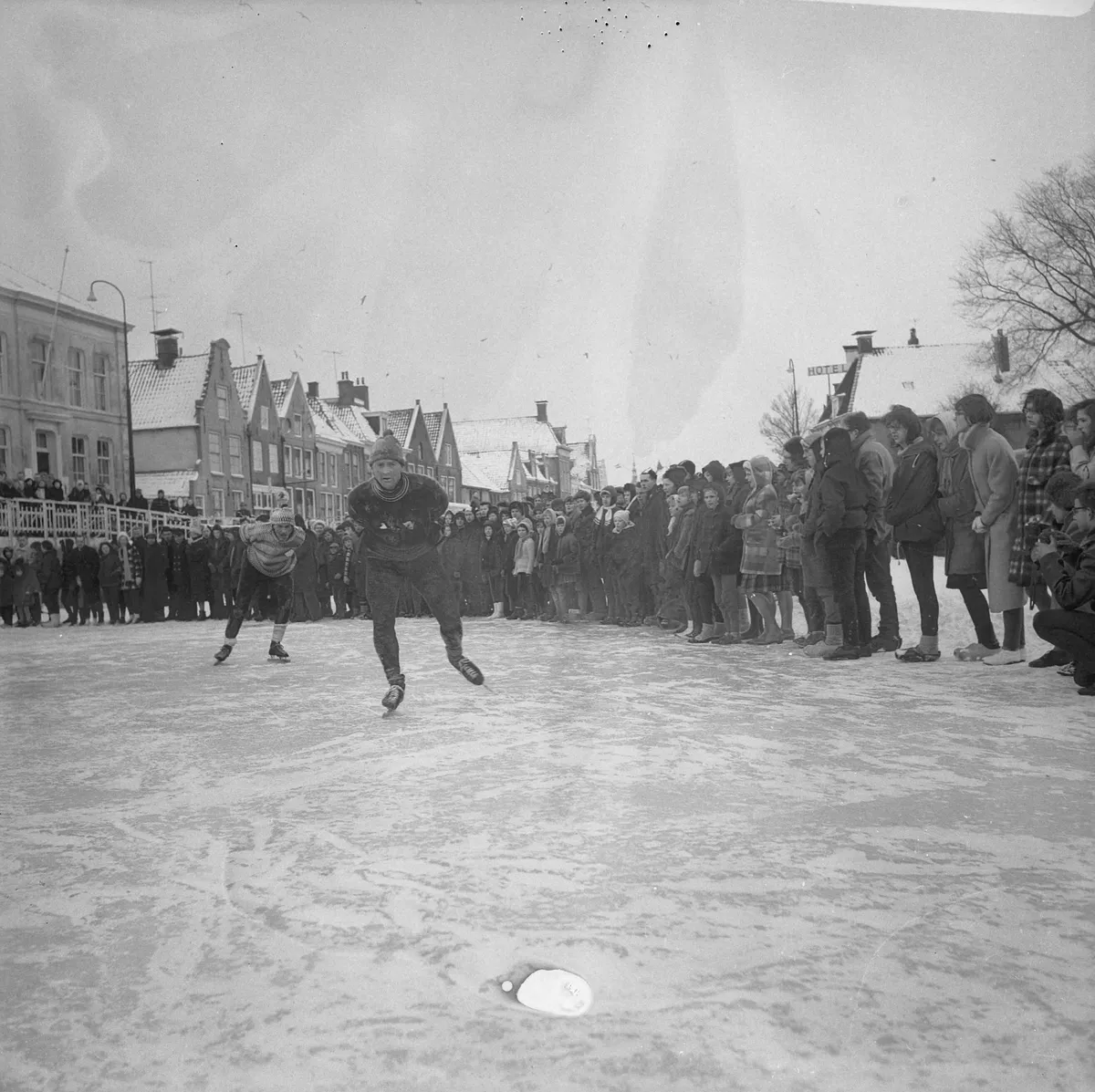
Photo: Participants in the ‘Elfsteden’ ice-skating tour before climate change made its appearance.
The Dutch are famous for their achievements in speed skating. For the Dutch themselves, there is one skating event that brings the country to a standstill, with everyone glued to their television sets: the ‘Elfstedentocht’. This 200 km long ice-skating tour, held in the province of Friesland and connecting 11 towns, is part of the Dutch’ cultural-historical heritage. The last one was held in 1997. Over the past 30 years, the winters have not been cold enough to reach the required ice thickness of at least 15 cm.
An entire generation is growing up without experiencing this event. The tour will surely be skated again someday, but when? Will people in their thirties today ever get to experience this?
Beyond its cultural significance, the Elfstedentocht is also a good indicator to illustrate to the Dutch the speed at which the climate is changing. At the beginning of the last century, winter conditions were favourable for organising this event once every five years. The yearly chance of an Elfstedentocht has already decreased to about 3 to 7%, according to previous studies.
In a recent study, based on climate models and ice growth models, a further decrease in the probability of this event in this century was projected. Under an intermediate scenario of climate change, that seems to be the most likely future pathway, only one or two winters between now and 2100 will be cold enough for this ice-skating tour to be organised. In a low emissions scenario, the chance of having an Elfstedentocht is only slightly higher. In the intermediate scenario, the likelihood of this tour becomes virtually zero by the end of the century.
Recently, there has been much discussion among scientists regarding the potential collapse of the AMOC (Atlantic Meridional Overturning Circulation). If this were to occur, this would likely cause substantial cooling in Northern Europe. Naturally, in that case the changes for an Elfstedentocht would increase once again.
Source: Verbruggen et al., 2026. Nature Scientific Reports 16.