Burned area in southern Europe is increasing again, and firefighting is to blame
October 5, 2026
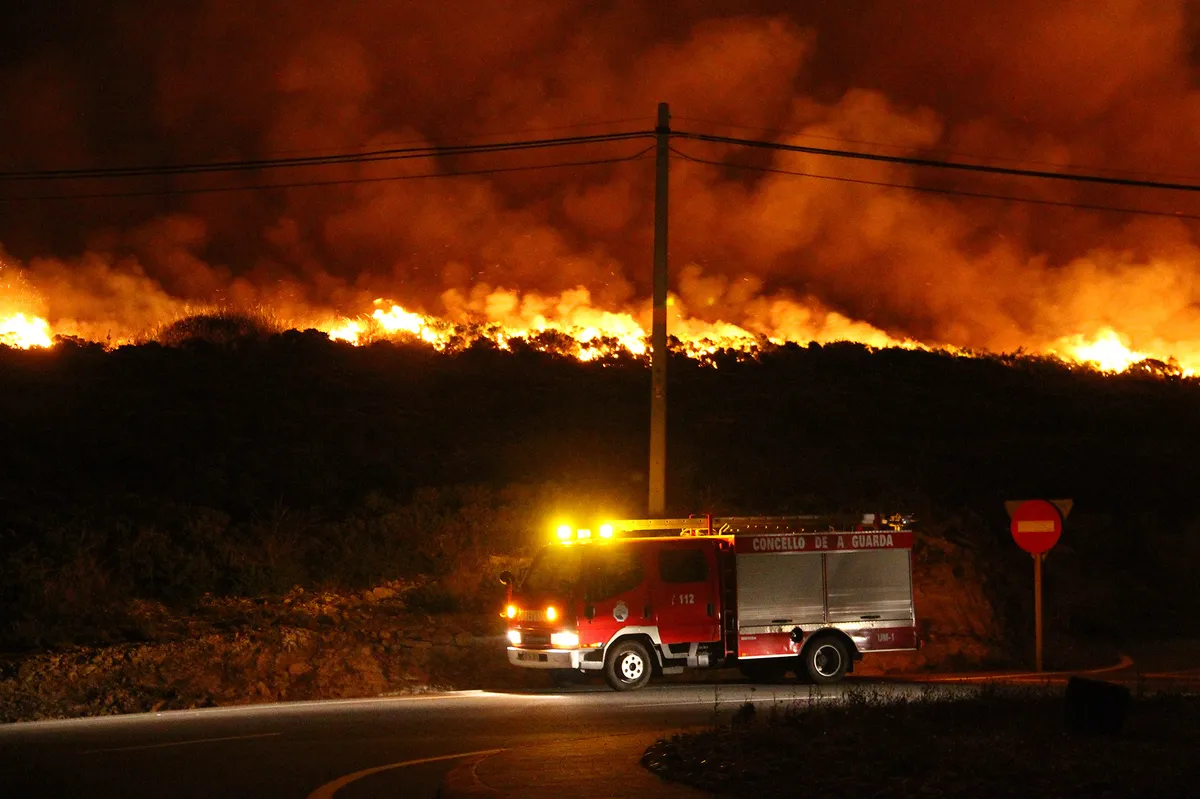
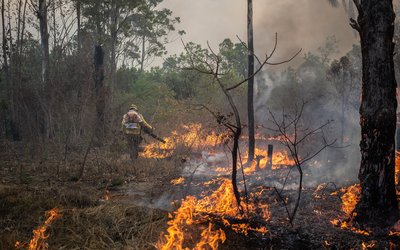
Photo: Fighting a wildfire in Spain (source: Elentir, www.flickr.com)
The disastrous year 2025
In 2025, the number and size of wildfires were extreme across Portugal and Spain. It was the most destructive year in Spain in more than three decades, and in Portugal since the record-breaking season of 2017. In Spain and Portugal, 350,000 and 250,000 hectares burned, respectively, accounting for about 80% of the total burned area in southern Europe that year.
In 2025, the spring was unusually wet. This stimulated vegetation growth. Then, the weather changed drastically to an extremely hot and dry summer. The abundant fuel due to the wet spring followed by an exceptionally hot and dry summer led to the intense fires.
Rebound burned area
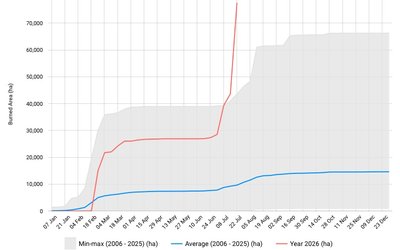
The wildfire season of 2025 is part of a trend. Since the early 1980s, the annual burned area in southern Europe had declined steadily. However, since 2018, the annual burned area has been increasing again across southern Europe, a recent study shows.
Despite this rebound, burned area in southern Europe remains lower than in the 1980s, except for Portugal. In Spain, France, and Italy burned area in the past seven years was 25%, 41%, and 31% lower, respectively, than in the 1981–2010 period. This decline is largely due to improvements in fire prevention and suppression. Since the 1980s, according to the authors of this study, ‘Southern Europe has strengthened fire suppression capacity through better-trained brigades, expanded aerial resources, rapid initial-attack strategies, and, in some countries, fuel-break networks and public awareness initiatives’.
The recent rebound in burned area reflects the trend in fire-weather conditions in recent decades across southern Europe. Compared with 1981–2010, the number of days with extreme fire-weather conditions has increased from less than 10 days in the 1981–2010 period up to 25 in parts of southern Europe over the past decade. This increase corresponds with rising summer temperatures and more intense summer droughts.
“Suppression paradox”
Investments in prevention and suppression have reduced the number of wildfires in southern Europe. As a result, fuel accumulation has increased. Also, climatic conditions that favour wildfires have continued to worsen, particularly in Portugal and Spain. As a result, wildfires are now increasingly exceeding existing suppression capacity. A shift has occurred in southern Europe towards fewer, but more intense and larger wildfires.
In Portugal and Spain, a small number of wildfires is now responsible for most of the total burned area. This trend will continue in the coming decades. According to the authors of this study, ‘Europe is expected to face up to a tenfold increase in extreme fires this century’.
Experts call this a “suppression paradox”: the successful suppression of wildfires promotes fuel accumulation, ultimately leading to extreme megafires that are hard to control. Prescribed burning and allowing low-intensity fires to spread under safe conditions can be effective strategies to counteract this paradox, the authors of this study suggest.
Source: Feron et al. 2026. Scientific Reports 16: 21852.