Opinion
Wilfried ten Brinke – editor-in-chief ClimateChangePost
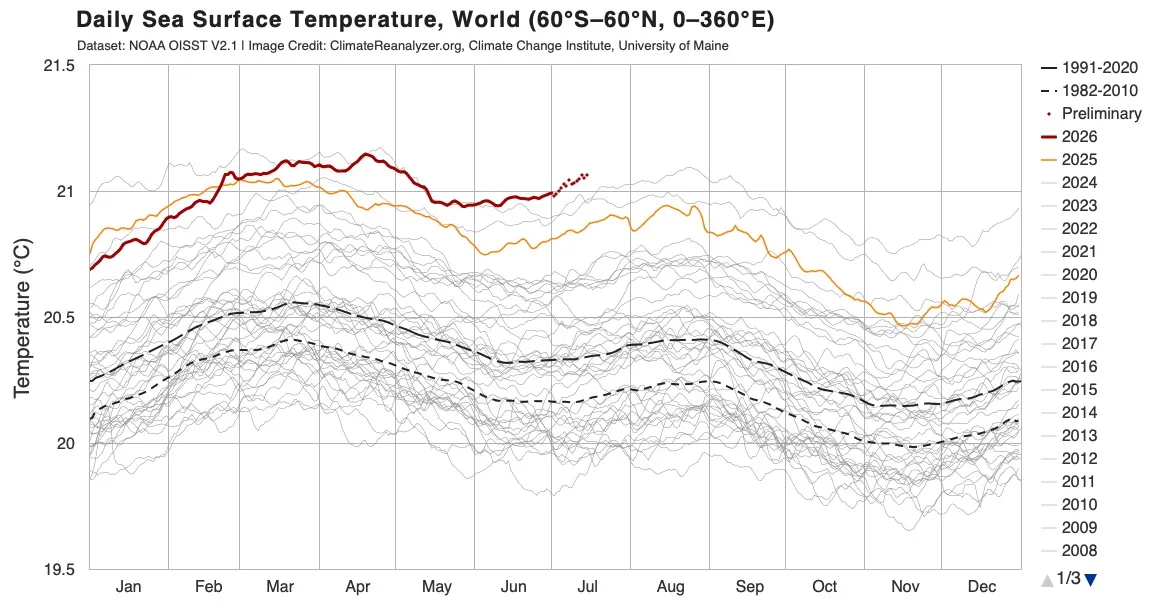
(Credit graph: Climate Reanalyzer, University of Main)
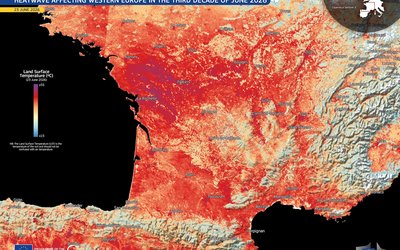
We do not seem to fully grasp the situation yet. Our environment is changing rapidly, yet we act as if nothing much is going on. For years, I have been fascinated by how the shifting climate affects life in Europe. In the north, we are witnessing extremes that, twenty years ago, were seen only in the south of our continent: prolonged heatwaves, massive forest fires, and flash floods. Even a mild summer in Europe can easily lead to more than 50,000 heat-related deaths; this year, the figure will almost certainly be higher. Wildfires in the south cause billions of euros in damage annually. We used to know flash floods—massive inundations following heavy rainfall—only from television, seeing cars drift through the streets of towns and villages in Southern Europe. Since the summer of 2021, however, we in Northern Europe have experienced them firsthand. Extreme rainfall caused flooding in Germany, Luxembourg, Belgium, and The Netherlands, resulting in a total of more than 230 fatalities and 50 billion euros in damage.
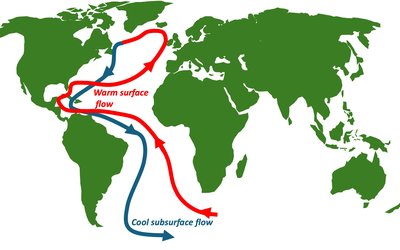
What worries me most is the warming of the oceans. Many people might think that thermometers show how the climate is warming. Instead, look at the oceans—and the seas surrounding us—and see what is happening. We see only one percent of global warming reflected on our thermometers. Some of the warming ‘disappears’ into the melting of glaciers and the ice caps, and the warming of the land. More than 90 percent of the warming is found in the oceans. We see it today: Virtually all the seawater around Europe is now several degrees warmer than normal at the surface.
Marine heatwaves—that is what we call this extreme warming of seawater. We first observed this phenomenon in Europe during the summer of 2003. At that time, the waters of the Mediterranean were 2 to 3 degrees warmer than the summer average for more than a month. Experts predicted then that this phenomenon would become the ‘new normal’ before 2050. In my view, we have already reached that point. We have seen these heatwaves recur several times in recent years, and now we are observing them further north as well—even in the North Sea.
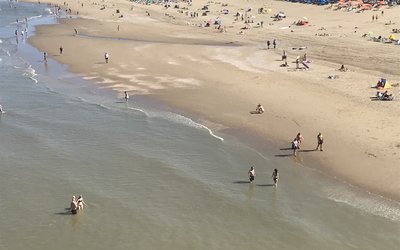
You might be thinking: that’s great for swimming. I am thinking about the damage to marine life. I am also thinking about the increased risk of flooding; after all, warmer seawater often means heavier rainfall over a short period. And what about the combination of extremes that can compound the misery? When wildfires destroy forests, the role those forests play in regulating the water cycle is lost. Forests channel rainwater into the soil, absorb and transpire water, and bind the earth together. If heavy rain falls on an area ravaged by wildfires, the water rushes across the bare landscape, sweeping away soil and dead wood—potentially triggering a major flood disaster downstream. Nothing new there. We shall see; summer has only just begun.
The World Economic Forum annually identifies the threats that people are most concerned about. In recent years, climate change has been viewed as the greatest threat for the coming decade. However, regarding the next two years, that threat has consistently dropped out of the top three. Evidently, there is always some other short-term crisis demanding full attention and pushing climate change into the background.
There is a well-known prayer in the Netherlands in which we ask for not only our daily bread, but for a - small - flood disaster every now and then as well. In the past, the Dutch occasionally needed a disaster to remind them of the vulnerability of life in a delta and of the investments that remain necessary. I fear that today, too, we need disasters to accelerate efforts to curb climate change and adapt to its consequences. We saw how quickly things can change when Trump’s threats led to a turning point in defense spending by other NATO members. We cannot expect anything from Trump regarding the climate, but who else is there?