Coastal erosion and coastal floods
New Orleans’ future threatened by sea level rise and coastal erosion
May 7, 2026
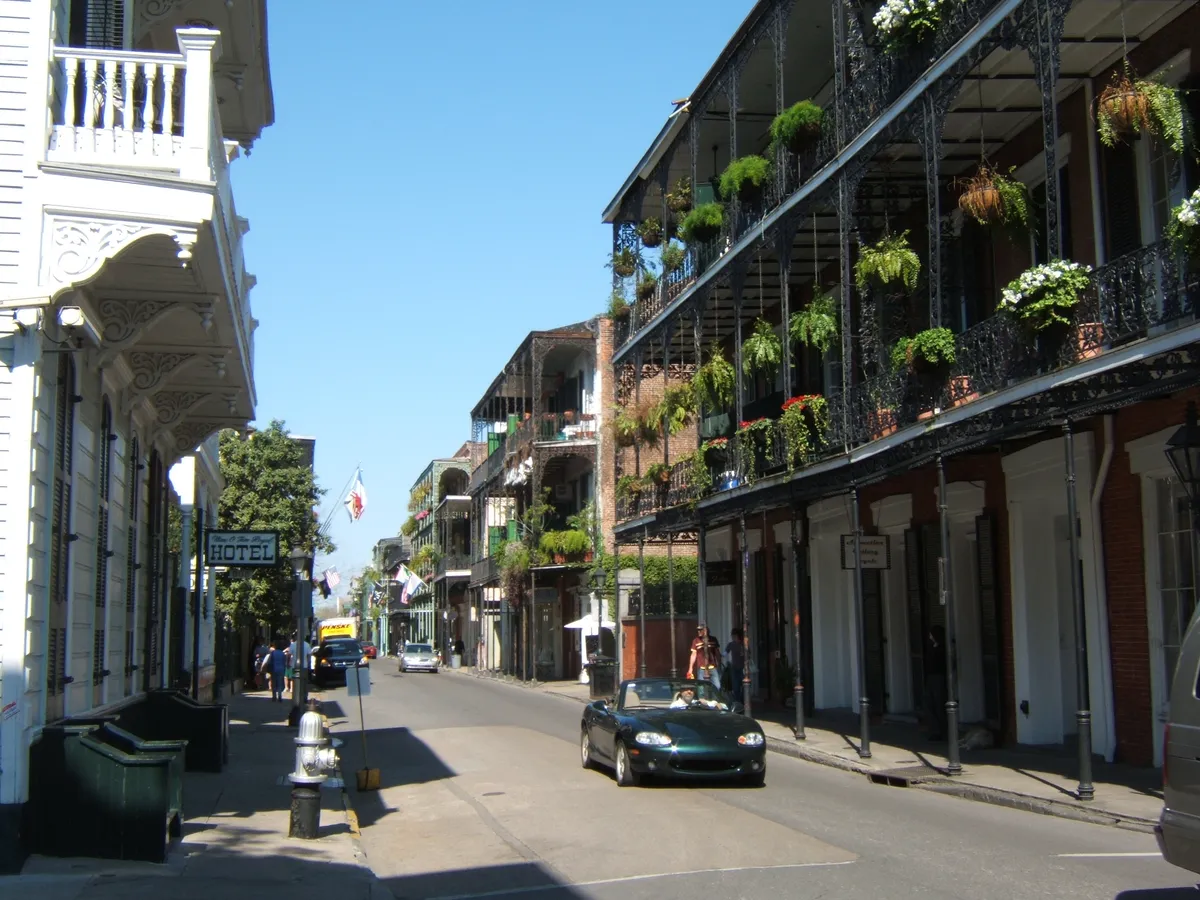
‘The window of opportunity to save the New Orleans area in the long run has probably closed’. In a recent article in the scientific journal Nature Sustainability on New Orleans’ future in a changing climate, scientists argue that sea level rise, subsidence, and coastal erosion make a relocation of more than one million people in the region inevitable.
Most exposed in the world
New Orleans is in the central US Gulf Coast, the single most exposed low-elevation coastal zone in the world in terms of projected relative sea level rise throughout this century. Already at about 3 mm per year, the coastal wetlands in this region start to drown. Widespread conversion of this low-elevation coastal zone into open water is probably unavoidable, the authors conclude. The future of more than a million inhabitants is at stake.
The high vulnerability of this region to relative sea level rise is due to the microtidal regime of the Gulf of Mexico. The tidal range in Louisiana is less than 0.5 m. Therefore, it takes only a short time of accelerated relative sea level rise to drown these wetlands.
The past is the key to the future
The authors of this study took the situation of the previous interglacial, 125,000 years before present, as a reference to assess the likely sea level rise in the coming centuries. They conclude that relative sea level rise in this region will probably be 3–7 m in the long run, with a shoreline bound to migrate as much as 100 km inland.
Erosion is threatening New Orleans
In addition to relative sea level rise, erosion of the Mississippi Delta is threatening New Orleans. The delta has grown since the slowdown of global sea level rise about 7,000 years ago but the situation reversed one century ago. Now, coastal wetland loss is the dominant environmental challenge for this region. The total area lost since the 1930s exceeds 5,000 km2. The erosion is due to a reduction of sediment input from the Mississippi River because of embankments, subsidence due to the extraction of fossil fuels, and damming of the Missouri River, the main sediment source of the delta. In addition, canals excavated mostly for the oil and gas industry have accelerated saltwater intrusion and wave erosion, further exacerbating the problem.
Coastal Louisiana, including New Orleans, is now being threatened by a combination of many challenges: accelerating sea level rise, subsidence, reduced sediment input from the rivers, and intensifying tropical cyclones due to climate change.
Managed relocation
According to the authors, depopulation of the region is already under way since 2000, especially following major hurricane seasons. Rising insurance premiums can become a major factor influencing out-migration.
Louisiana should develop policies to relocate the population of New Orleans and other residents in the low-elevation coastal zone of the state, the authors advise, rather than waiting and only taking action under crisis conditions. Many residents adapt in place through home elevation, flood-proofing, insurance and lifestyle modifications. The authors stress that this current practice is undesirable since it creates additional barriers – a lock-in – to future mobility.
The authors are aware that managed relocation may at present seem too disruptive, considering the uncertainties about the timeline of relative sea level rise. But relocation is a long-term process that cannot be put off, they argue. The longer this is put off, the more challenging it will become. The time left for an orderly relocation – during relatively stable conditions – is probably no more than decades.
Buy time
In the meantime, Louisiana should slow wetland loss to buy time. In this respect, the decision to cancel sediment diversions in the river system, which were intended to transport sediments to the eroding coastline, is catastrophic. In the words of the authors, ‘abandoning large sediment diversions effectively means giving up on extensive portions of coastal Louisiana, including the New Orleans area’. The embanked New Orleans area may well be surrounded by the Gulf of Mexico before the end of this century, they warn.
This is not the first time the lead author spoke out so clearly about New Orleans’ future. In an article in the journal Science Advances he already concluded that ‘the disintegration of the coastal marsh had already crossed an irreversible tipping point and New Orleans, in the best-case scenario, would one day be an island in the Gulf of Mexico, some 30 miles off the coast’. What is new in the recent article is the author’s call to start planning for relocation of the population.
Source: Törnqvist et al., 2026. Nature Sustainability.