Coastal erosion and coastal floods
Sea level rise presents Venice with drastic choices
April 21, 2026
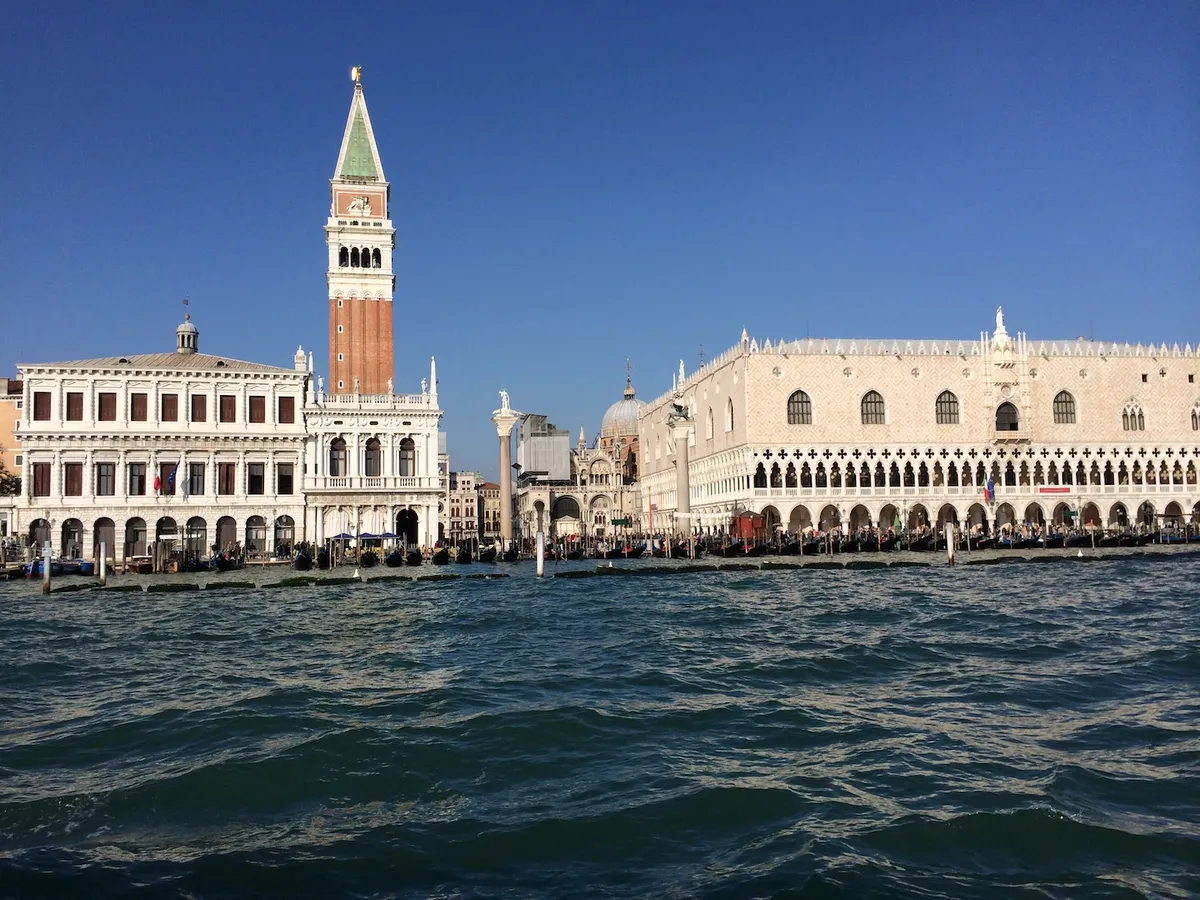
Sea level rise is jeopardizing the future of Venice and may call for drastic measures to ensure the city’s survival. The current situation, in which the lagoon is usually open, and a mobile barrier system closes the lagoon during storm surges, will probably no longer be effective in the next century. Choices for a new design of the protection of the monumental values of the city are unprecedented and come with extreme consequences for the city, the ecosystem of the lagoon, the economy, and daily life of the residents.
18 floods in the last 23 years
The preservation of Venice in a changing climate has been a growing concern. The city is used to floods but the number and intensity of floods is increasing due to relative sea level rise. In the last 23 years, more than 60% of the city has been flooded 18 times. Since 2022, a mobile barrier system is protecting the city against extensive flooding. This barrier closes the three lagoon inlets during storm surges. The rest of the time, the water of the Adriatic Sea flows in and out of the lagoon and the tidal ecosystems in the lagoon are preserved.
Flood barrier no longer effective
With sea level rise, the mobile barrier system must be closed increasingly often. The projections of sea level rise indicate that probably in the next century the closure frequency will have increased to such an extent that the current strategy of keeping the lagoon open except during storm surges must be abandoned. The strategy will no longer be effective. In fact, this situation could occur as early as the end of this century if a high-end scenario of climate change unfolds.
Alternative strategies
We cannot sit back and wait and see how climate change and sea level rise unfold. Large-scale interventions require lead times of up to half a century. The decision to build the current barrier system, for instance, was taken after the 1966 flood while the barrier was not completed until 2022. The time is approaching when drastic choices must be made. These drastic choices were assessed in a recent study on the long-term future of Venice and include three alternative strategies: (1) building ring dikes around the city’s historic islands while keeping the lagoon open, (2) closing the entire lagoon, and (3) retreating by removing the city’s monuments from the lagoon and rebuilding them elsewhere.
The costs of building ring dikes are estimated at 0.5 - 4.5 billion euros. These dikes would protect the city against 6 metres of sea level rise but would disconnect it from the lagoon.
Closing the entire lagoon would be far more expensive, at least 30 billion euros according to the experts’ estimates. The lagoon’s ecosystem would be lost, however, and the residents’ safety would depend on large-scale pump systems to prevent flooding in this ‘bathtub’.
It goes without saying that the costs of relocating the city are extremely high. A first guess in this article is 100 billion euros. The result would also be unimaginable: leaving the lagoon where the city stood for more than 1,600 years on millions of wooden pilings.
Source: Lionello et al., 2026. Scientific Reports 16: 9438.