The world needs to step up adaptation to ensure global food security
February 11, 2026
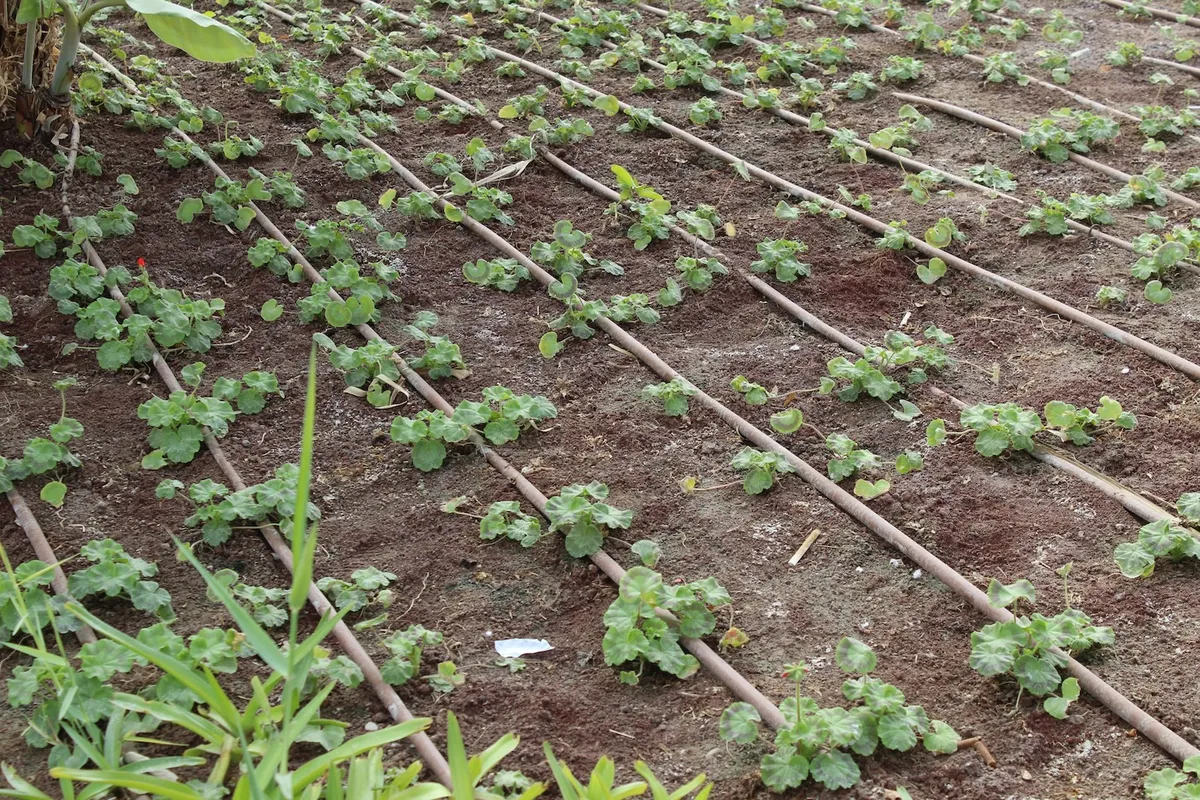
Climate change threatens global food production, but the extent to which remains unknown. Both the impacts of climate change on crops and the effect of adaptation on reducing these impacts are still uncertain.
In a way, most studies on the impact of climate change on food production are theoretical. They are based on scientific knowledge about crop growth under different weather conditions, and adaptation scenarios to relieve the vulnerability of crops to weather extremes. These studies indicate that adaptation should have positive effects on global agricultural productivity. In practice, local farmers’ adaptation will differ from these scenarios, as farmers make various adjustments over time and their choices are influenced by economic circumstances, which vary from farmer to farmer.
Actual adaptation at the global scale
The effect of actual adaptation at farms across the world has not been studied systematically at the global scale. A recent study, published in Nature, fills this gap. The authors looked at adaptation by farmers in the ‘real world’ for six staple crops spanning 54 countries, capturing two-thirds of global crop calories. They applied this information in simulations of future crop production under climate change and economic development. The latter is particularly important as future economic development is likely to alter agricultural practices in ways that could change agriculture’s resilience to weather extremes. The authors examined two possible futures: one with moderate and one with strong global warming. The crops in this study include maize, soybean, rice, wheat, cassava, and sorghum.
Negative impacts globally
According to this study, global food productivity declines under climate change. This is contrary to the outcomes of most studies based on scientific knowledge about crop growth, calibrated to experimental farms and more theoretical adaptation scenarios. These previous outcomes tend to indicate productivity gains globally, for instance for maize, wheat, soybean, and rice. This new study shows completely different, and generally negative impacts for these crops.
Crop yield decline in 2050
With moderate global warming, staple crop yields – expressed as calories per hectare – are projected to decline by about 8%, according to this new study. With strong global warming, the projected decline is about 10%. For Europe the numbers are a bit less dramatic: a projected decline by about 4% under both moderate and high-end global warming.
Crop yield decline in 2100
Food production is projected to decline further from 2050 onwards. By 2100, with moderate global warming, food production is projected to decline by almost 13% at the global scale and by 6% for Europe. With strong global warming, the projected decline is dramatic: more than a third globally and more than 20% for Europe alone.
In Europe, the south is particularly vulnerable whereas in the north opportunities arise. Maize yield, for instance, is projected to decline by 40% in 2100 along the Mediterranean and increase by 10% in the north.
The role of adaptation
The authors of this study project that adaptation and income growth will only offset part of the global losses in 2050 and 2100: about a quarter in 2050 and a third in 2100. For all staple crops except rice, substantial losses remain. For Europe, no significant impact of adaptation on food production is projected.
Global inequality
In most studies on future food production, the largest impacts are projected for the global poor. This new study also shows substantial losses in low-income regions, but not the largest. Global impacts are dominated by losses to modern-day breadbaskets with favourable climates, this study shows. In these breadbaskets, adaptation to climate change is currently limited simply because so far there was no need to adapt. This low level of adaptation makes these breadbaskets vulnerable to climate change. Agriculture in the United States, for instance, is optimized for high average yields but not robust to climatic changes. Lower-income populations, on the other hand, tend to live in hotter climates, in which present adaptation rates are higher.
Food security
The results of this recent study highlight the need for innovation, cropland expansion and further adaptation to ensure global food security in a changing climate.
Source: Hultgren et al., 2025. Nature 642: 644-652.