For every 0.1 °C increase in seabed temperature, we lose 7% of fish biomass
February 26, 2026
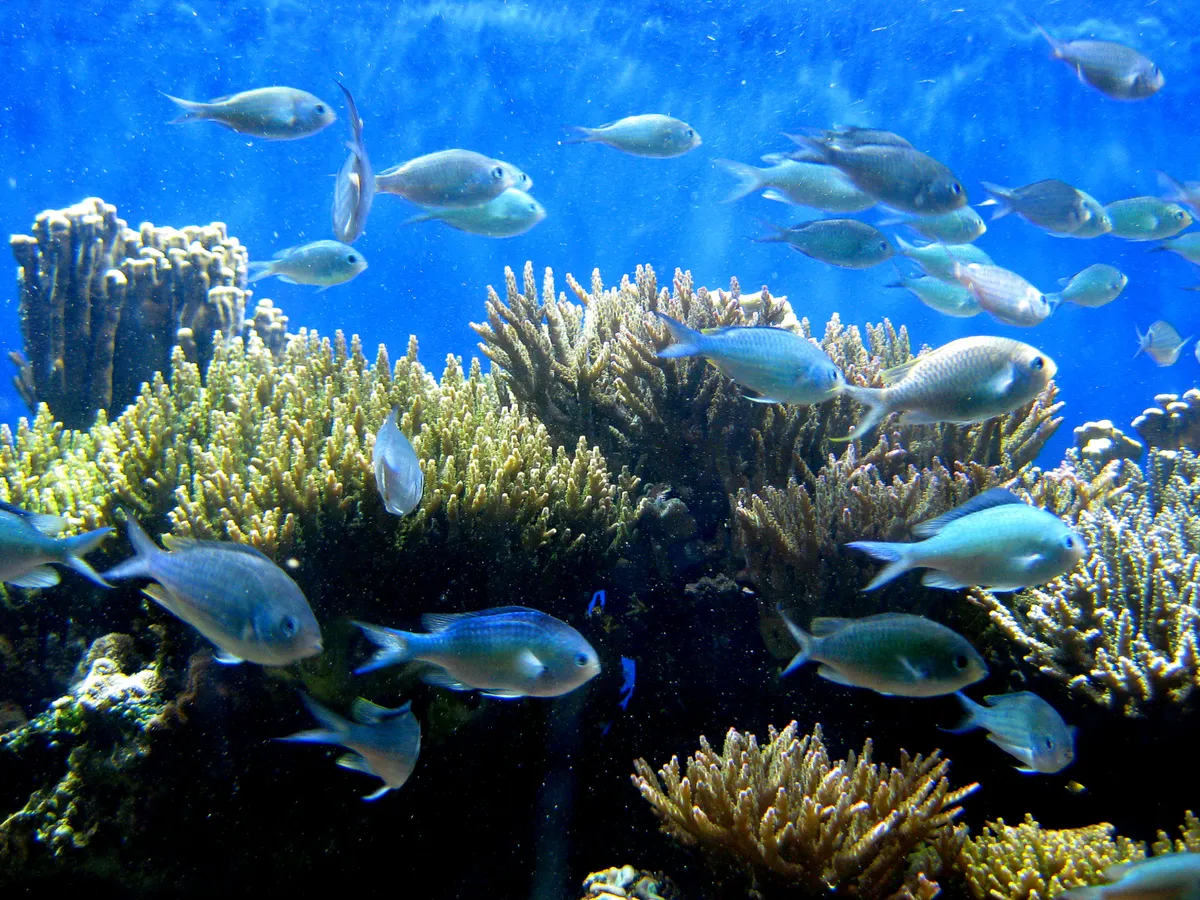
Photo: Peter Corbett, www.flickr.com
The oceans are warming and this has dramatic consequences for fish biomass. A study for the northern hemisphere shows that fish biomass is decreasing by 7.22% on average for every 0.1 °C seabed temperature increase per decade.
The study is based on 123,000 unique samples, encompassing 1,566 fish species, from 1993 to 2021. The study covers three major oceanic regions – the Northeastern Pacific Ocean, the North Atlantic Ocean and the Western Mediterranean Sea.
In addition to the effects of long-term ocean warming, there are short-term fluctuations resulting from individual warm years and the rising intensity, frequency and duration of marine heatwave events. These three thermal stressors, acting simultaneously across temporal scales, are reshaping marine ecosystems.
Short-term effects
The extent to which individual warm or cold years affect fish biomass depends on specific circumstances. Fish populations living at the warm edge of their distribution may be more vulnerable to warming owing to physiological thresholds. Fish populations living at the cold edge of their distribution, on the other hand, may even benefit from warming.
The study confirms these results of previous studies: Short-term warming disproportionately benefited cold-edge populations; in cold years, cold-edge populations declined while warm-edge populations increased. Overall, cold-edge populations seem to capitalize on warming more effectively than warm-edge populations benefit from cooling.
The same holds for the effect of marine heatwaves. Previous studies showed significant biomass declines of warm-edge populations during marine heatwaves, while cold-edge populations show more resilience or less detrimental effects. The study also confirms these results: Marine heatwaves lead to a substantial increase in biomass for cold-edge populations while systematically disadvantaging populations already near their upper tolerance limits.
Short-term warming events may lead to declines in one region and increases in another, even within the same species. Sprat populations, for instance, are living at the warm edge of their natural range in the Mediterranean Sea and at the cold edge of their range in the North Sea. A heatwave could lead to a decline of sprat biomass in the Mediterranean Sea and a boom in the North Sea.
Long-term effects
“Although short-term warming may offer temporary gains for some populations, particularly at the cold edge of species’ ranges, these localized and episodic benefits do not offset the broader, long-term threat posed by sustained ocean warming.” This is the key message from this study. Short-term climatic events may lead to winners and losers on the short term, but both cold- and warm-edge populations are equally vulnerable to long-term warming. This long-term vulnerability is a 7.22% fish biomass decrease for every 0.1 °C seabed temperature increase per decade.
Long-term ocean warming and declines in marine biomass have also been linked in previous studies. Long-term warming overpowers the more variable effects of short-term weather fluctuations.
Source: Chaikin et al., 2026. Nature Ecology & Evolution.