Extreme weather in times of climate change
Today, 10 years after the Paris Climate Agreement was signed, the Royal Netherlands Meteorological Institute (KNMI) published the report "Extreme Weather in Times of Climate Change (text in Dutch)." A comprehensive report that demonstrates how extreme weather, partly due to climate change, can already become in the Netherlands and how this can impact society. Below we present a brief summary of the KNMI's findings and include – in bullits – a reflection based on previous articles on the ClimateChangePost.
KNMI on Heat
In Amsterdam, temperatures can exceed 35°C for at least four consecutive days, with little cooling at night. This can lead to irritable residents and tensions on the streets.
- Moreover, many people, especially the elderly, die prematurely from the heat. More than 50,000 people in Europe have died prematurely in recent summers, each year.
KNMI on Wildfires
Wildfires can burn hundreds of hectares of natural areas in just a few hours.
- Elsewhere in Europe, the situation is much worse: Burned area in Spain was approximately 1,000 times larger last year.
KNMI on Cold waves
Extremely cold weather can still have a strong impact on daily live in the Netherlands for two weeks in a row.
- In Europe, far more people currently die from cold than from heat, but in the second half of this century, more people in Europe will likely die from heat than from cold.
KNMI on Storms
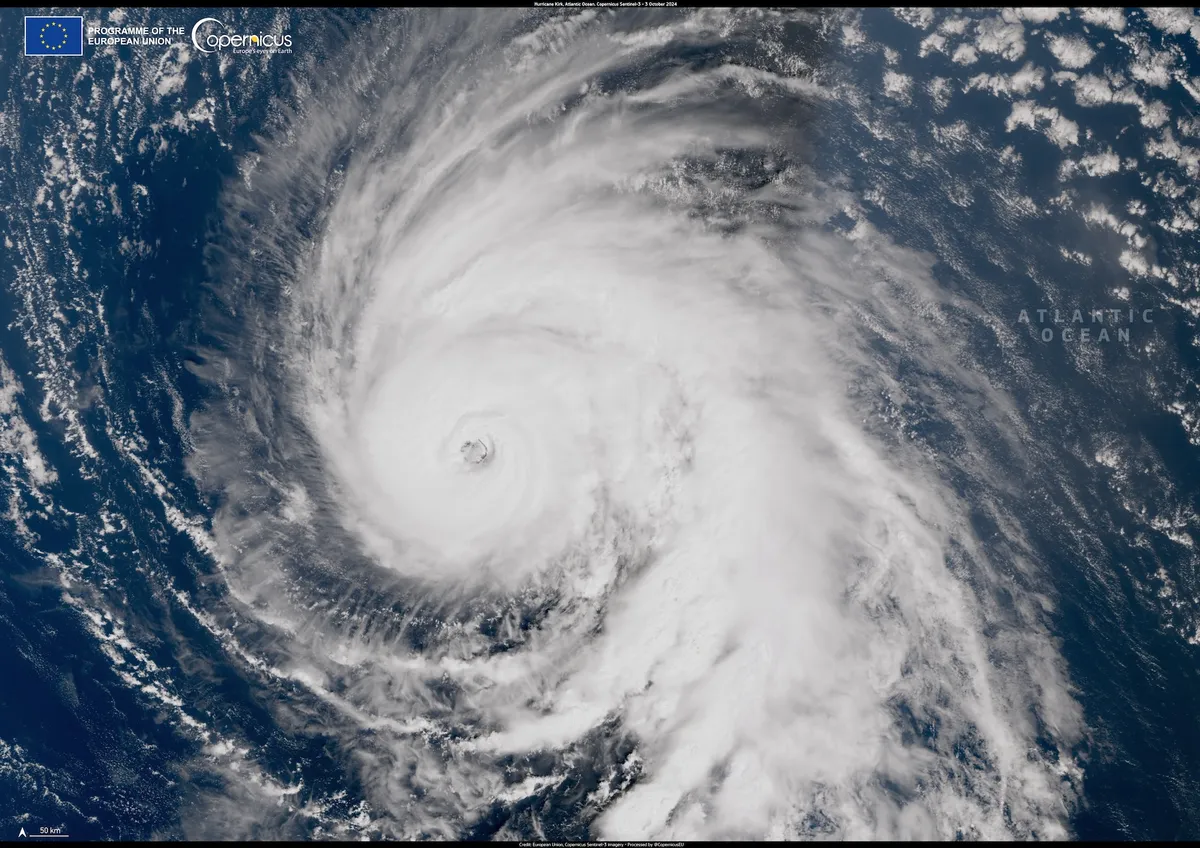
Tropical storms can reach the Netherlands as a former hurricane, causing billions of euros in damage. With continued seawater warming, such storms could become even stronger in the future.
- This scenario was first published in 2013. At the time, it seemed like a distant prospect, but with Ophelia (2017) and Kirk (2024), it quickly became a reality.
- And let's not forget the risk of hurricanes over the increasingly warm Mediterranean Sea – Medicanes.
KNMI on Hurricanes
The Caribbean Netherlands is unlikely to be hit by hurricanes more often in the future, but they will become stronger and bring more rain as the seawater continues to warm.
- They are also growing faster and stronger into major hurricanes, reducing preparation time.
KNMI on Droughts
Due to even lower Rhine discharges, additional costs for inland shipping could amount to nearly €300 million in one summer, a third more than the damage incurred during the extremely dry summer of 2018. This situation will become more common.
- Droughts are becoming increasingly common in Europe and are also becoming more extreme.
KNMI on Rainfall
During heavy downpours, 80 to 100 mm of rain can fall locally in an hour, and 150 to 170 mm in just a few hours. Cars can get stuck in flooded streets.
- The intensity of heavy downpours will continue to increase. Half of the annual rainfall falls in fewer days.
KNMI on Dunkelflaute
Dunkelflaute – weather conditions with both little wind and little sun – could jeopardize power supply.
- This vulnerability does require attention. But the positive news: We've reached a tipping point in the use of fossil fuels for electricity generation.
KNMI on vector-borne diseases
The West Nile virus will likely be more prevalent in the Netherlands in the future, resulting in more people becoming infected.
- And this is just one of the many effects of climate change on public health.