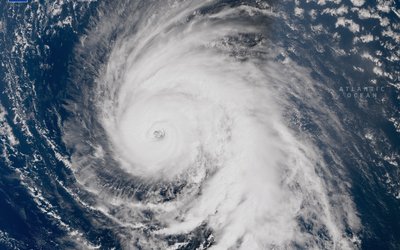

The signs are becoming increasingly clear: there is a high probability that 2027 will be an exceptionally warm year, and that is not good news. The cause is the natural phenomenon El Niño. During this phenomenon, the trade winds and ocean currents in the Pacific Ocean, particularly off the coast of South America, decrease sharply. As a result, the mixing of warm seawater at the surface with colder water at greater depths also diminishes. The consequence is that surface seawater warms up exceptionally strongly. This has consequences for weather worldwide.
The last El Niño occurred in 2024. The extra global warming because of this phenomenon resulted in a global warming of 1.52 °C, compared with pre-industrial times, exceeding the 1.5 °C threshold of the Paris Climate Agreement. Without the El Niño phenomenon, the human-caused global warming would have been ‘only’ 1.36 °C.
Model forecasts suggest that a very strong El Niño may be in the works for late 2026. It takes of couple of months for global temperatures to respond to this. That’s why it is becoming increasingly likely, according to the experts, that 2027 will be an extremely warm year with consequences being felt worldwide. Looking back at the effects of recent El Niño periods, both droughts and floods can be extra intense, wildfires more devastating, more crops can be lost than in a normal year, and marine biodiversity can suffer significant damage.
Source: https://www.theclimatebrink.com/p/the-el-nino-cometh